As Childhood Cancer Awareness Month begins, new public installation highlights the hidden emotional impact of childhood cancer beyond treatment.
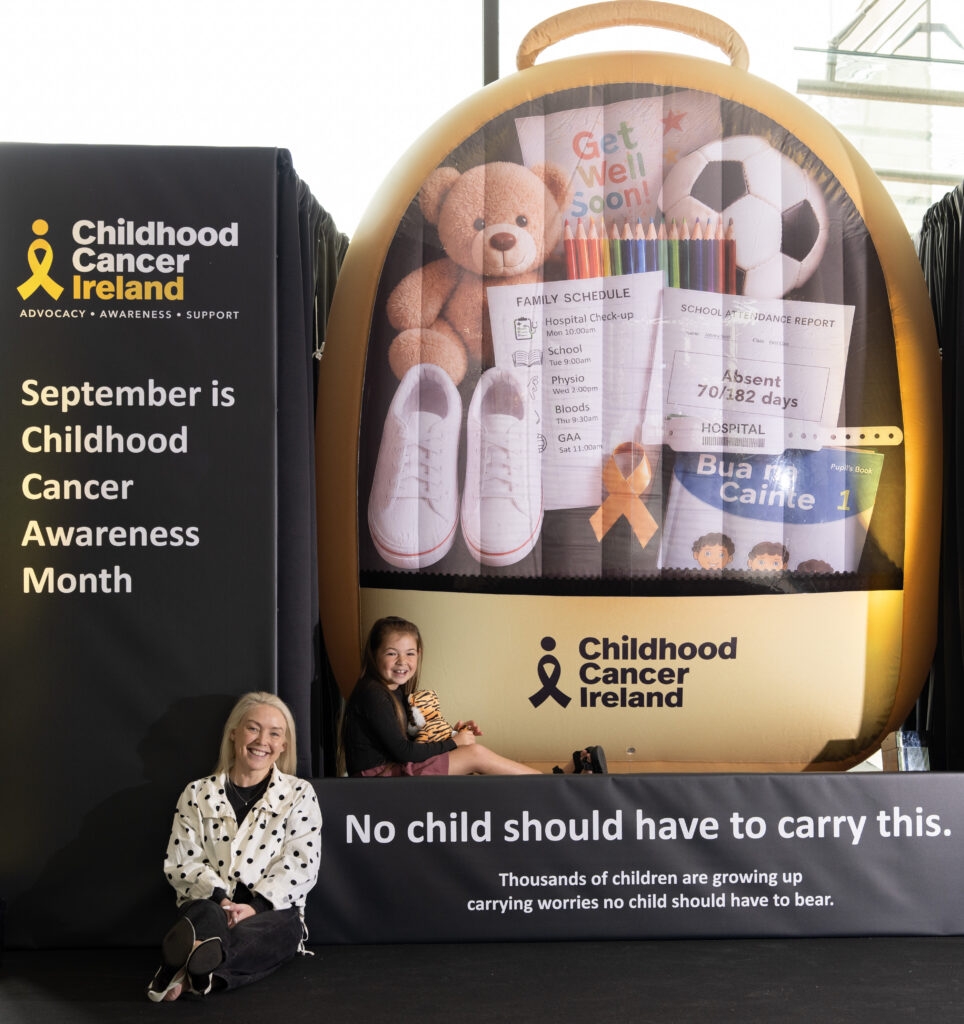
As Childhood Cancer Awareness Month begins this September, Childhood Cancer Ireland has unveiled a striking new public installation at Dundrum Town, shining a light on the emotional and psychological impact of childhood cancer that children can continue to carry long after treatment has finished.
The installation, ‘Things We Still Carry’ features a school bag, a familiar symbol of childhood, to explore the less visible realities children and families can continue to carry beyond treatment, including fear, anxiety, isolation, uncertainty and the pressure to return to ‘normal’.
The school bag installation is filled with everyday items and familiar fragments of school and home life, reimagined to reflect the experience of childhood cancer. From gaps in attendance records marking time away from the classroom, to ‘get well soon’ cards that arrived during difficult periods, and family calendars shaped around hospital appointments, each element tells a story of what can remain after treatment ends.
Laura Cullinan, CEO of Childhood Cancer Ireland, said: “Childhood cancer changes a family in ways that can be difficult to see from the outside. When treatment finishes, there is understandably an enormous sense of relief. But alongside that relief can come a wave of unexpected emotions – fear, anxiety, exhaustion and uncertainty about what comes next. There can be an expectation that treatment ending means life simply goes back to normal, but for many children and families, that isn’t the reality.
The Things We Still Carry helps to make some of those invisible experiences visible. A schoolbag represents something so ordinary. But for a child who has survived cancer, there can be so much more being carried alongside the everyday necessities: worries about their health, changes in friendships, missed sport, learning and social interactions, physical and emotional effects of treatment, and the fear that cancer could return.”
The activation forms part of Childhood Cancer Ireland’s Childhood Cancer Awareness Month activity and aims to challenge the perception that once a child completes treatment, their cancer journey is over. While the obvious signs of cancer may become less visible once treatment ends, the emotional, cognitive, psychological and physical impact (such as fatigue) often persist, making a return to everyday life challenging. For many children and families, the end of treatment does not necessarily mean the end of their childhood cancer journey.
Michelle Regazzoli Stone, Childhood Cancer Ireland Ambassador, said: “As a mum, it’s impossible not to be moved by what children and families affected by childhood cancer go through. What really struck me about ‘Things We Still Carry’ is how something as ordinary as a school bag can represent so much more – the worries, missed experiences and emotions that a child can continue to carry even after their treatment has finished.
“I’m incredibly proud to support Childhood Cancer Ireland and help shine a light on the families behind these experiences. I hope people who see the installation in Dundrum this week will stop for a moment, learn a little more about the realities of childhood cancer and, if they can, support the incredible work Childhood Cancer Ireland does for children and families across Ireland.”
The impact of childhood cancer is reflected in the demand for support from Childhood Cancer Ireland. In 2025, the charity provided 700 hours of Clinical Psychology, 390 hours of Play Therapy and approximately 300 peer-support engagements, alongside emotional-support assessments for 115 families coming to the charity for the first time. A further 35 young people received educational support related to their diagnosis, treatment or ongoing needs.
The installation encourages passers-by to stop and take a moment to consider a simple question: What if the hardest things a child carries can’t be seen?
Members of the public will also have the opportunity to help lighten the load by making a donation to Childhood Cancer Ireland, with funds supporting the charity’s services for children and families affected by childhood cancer.
Shining a Light on Childhood Cancer
Throughout September, Childhood Cancer Ireland will encourage communities across Ireland to Go Gold, the international symbol of childhood cancer awareness, to show solidarity with children and young people affected by cancer and their families. From wearing a gold ribbon pin and hosting a coffee morning, to organising a fundraising event or challenge, or holding a #GoGold day at your school or sports club, there are plenty of ways to get involved. Every ribbon worn, event held and euro raised helps make childhood cancer more visible and supports Childhood Cancer Ireland in providing vital emotional, psychological and practical support to children, young people and families affected by childhood cancer.
The charity will also host its annual Light It Up Gold Walk on the 12th of September in Maynooth Co. Kildare, bringing families, survivors, bereaved families and members of the wider community together to raise awareness and stand in solidarity with those impacted by childhood cancer.
Supporting Families Beyond Treatment
Childhood Cancer Ireland is a parent and survivor-led charity providing emotional, practical, financial and long-term support for families living through childhood cancer. Childhood cancer does not follow a neat timeline and neither does Childhood Cancer Ireland’s support.
When a child is diagnosed with cancer, medical treatment is vital. But the impact reaches far beyond treatment. Families face fear, disruption, isolation, financial pressure, emotional strain, sibling distress and long-term consequences that can surface months or years later.
Across childhood cancers collectively, 87% of children aged 0–15 diagnosed during 2011–2019 were alive five years after diagnosis, according to the National Cancer Registry Ireland. While outcomes vary considerably between diagnoses, the figure highlights the importance of recognising the needs of children and families after treatment has finished.
The charity believes there is a need for greater awareness of the challenges that can emerge after treatment and for families to know where they can turn for support.